


Finding the right investors for your business can feel overwhelming, especially when you’re juggling product development, team management, and market expansion. Whether you’re launching a tech startup or scaling an established B2B enterprise, securing investment funding remains one of the most critical challenges entrepreneurs face today.
The investment landscape has evolved dramatically over the past few years. Traditional funding routes now compete with alternative financing options, while investors have become more selective about their portfolio choices. Understanding how to navigate this complex ecosystem and present your business as an attractive investment opportunity can make the difference between securing the funding you need and watching competitors gain market advantage.
This comprehensive guide will walk you through proven strategies to find investors for your startup, from identifying the right investor types to crafting compelling pitches that convert meetings into funding commitments.
Understanding Different Types of Investors for Startup Funding
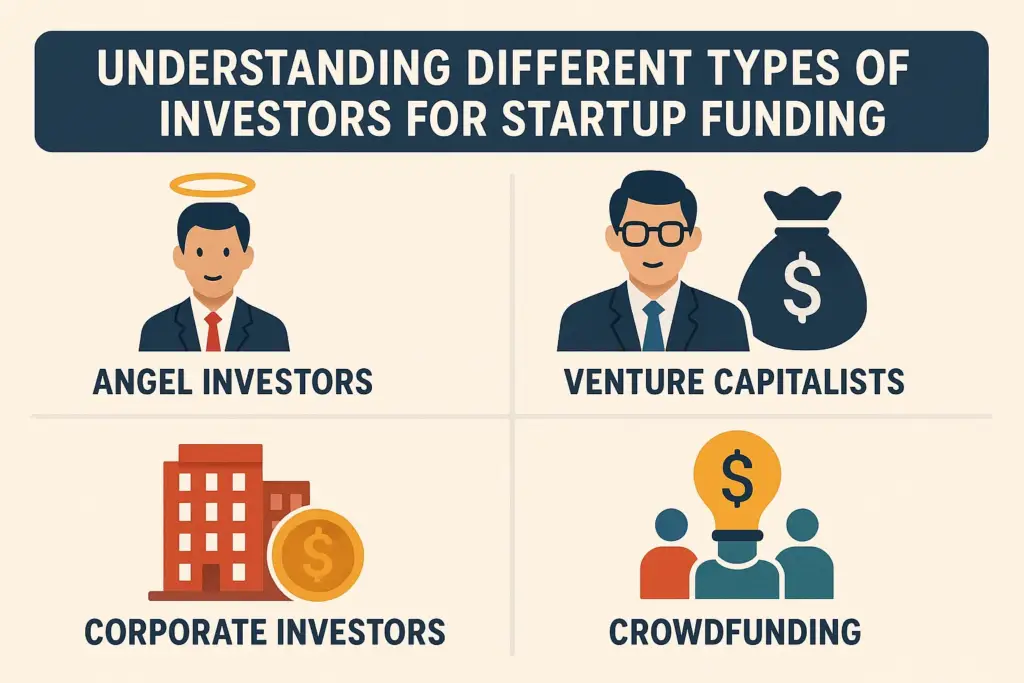
Before diving into search strategies, it’s essential to understand the various investor categories and their investment preferences. Each type brings different value propositions, funding amounts, and partnership expectations.
Angel Investors: Your Early-Stage Champions
Angel investors typically invest their personal wealth in early-stage companies, often providing the first external funding after friends and family rounds. These individuals usually invest between $25,000 to $500,000 and bring valuable industry expertise and networks.
Angel investors often prefer businesses in sectors they understand well. They’re particularly attracted to B2B companies with clear revenue models and B2C businesses with strong user engagement metrics. Many successful angels are former entrepreneurs who can provide mentorship alongside capital.
Venture Capital Firms: Scaling Your Growth
Venture capital firms manage pooled money from institutions and high-net-worth individuals. They typically invest larger amounts, ranging from $1 million to $50 million or more, depending on the funding round. VCs focus on high-growth potential companies that can deliver significant returns within 5-7 years.
These firms often specialize in specific industries or business models. Some focus exclusively on B2B software companies, while others might target consumer technology or healthcare innovations. Understanding their investment thesis is crucial for successful outreach.
Strategic Investors: Industry Partnership Opportunities
Strategic investors are established companies that invest in startups aligned with their business objectives. These investors offer more than just capital – they provide market access, distribution channels, and potential acquisition opportunities.
For B2B companies, strategic investors can accelerate customer acquisition through established enterprise relationships. B2C businesses benefit from strategic investors’ consumer insights and marketing capabilities.
Private Equity and Family Offices
Private equity firms typically invest in more mature companies with proven revenue streams. Family offices, managing wealth for ultra-high-net-worth families, often take a longer-term investment approach and may be interested in both financial returns and impact investing.
Preparing Your Business for Investment
Success in securing investment funding starts long before your first investor meeting. Preparation involves strengthening your business fundamentals and creating compelling presentation materials.
Building a Strong Financial Foundation
Investors scrutinize financial performance more than any other business aspect. Clean financial records, predictable revenue streams, and clear unit economics are non-negotiables for serious investment consideration.
Ensure your accounting systems accurately track key performance indicators relevant to your business model. B2B companies should focus on metrics like customer acquisition cost, lifetime value, and monthly recurring revenue. B2C businesses need strong user engagement data, retention rates, and monetization metrics.
Developing Your Investment Deck
Your pitch deck serves as the first impression for potential investors. It should tell a compelling story about your business opportunity while demonstrating market traction and growth potential.
Key slides should cover problem identification, solution overview, market size and opportunity, business model, competitive landscape, team credentials, financial projections, and funding requirements. Each slide should be clear, visually appealing, and support your overall narrative.
Creating a Compelling Executive Summary
Many investors request executive summaries before agreeing to full presentations. This document should capture your entire business opportunity in 1-2 pages, highlighting the most compelling aspects of your investment proposition.
Strategic Approaches to Find Investors for Your Startup
Finding the right investors requires a systematic approach that goes beyond generic outreach. Successful entrepreneurs use multiple channels and strategies to identify and connect with potential funding sources.
Leveraging Professional Networks
Your existing professional network often provides the most effective pathway to quality top investors. Former colleagues, industry contacts, advisors, and even customers can provide valuable introductions to potential investors.
Consider joining industry associations, attending trade conferences, and participating in professional organizations relevant to your business sector. These environments provide natural opportunities to meet potential investors and build relationships over time.
Utilizing Online Platforms and Databases
Several online platforms connect entrepreneurs with investors. AngelList, Crunchbase, and Gust provide searchable databases of investors, along with their investment preferences and portfolio companies.
LinkedIn has become an invaluable tool for researching investors and finding warm introductions. Many investors maintain active LinkedIn profiles where they share their investment interests and portfolio company updates.
Attending Networking Events and Pitch Competitions
Industry networking events, startup competitions, and investor conferences provide face-to-face opportunities to meet potential investors. These events often attract investors actively seeking new opportunities.
Pitch competitions offer dual benefits: potential prize money and investor exposure. Even if you don’t win, participating demonstrates confidence in your business and provides practice presenting to investor audiences.
Working with Investment Networks and Communities
Specialized investment networks and communities can provide structured pathways to connect with investors. Organizations like MyTablon offer curated networking opportunities where entrepreneurs can meet our statrtup investors in focused, productive environments.
These platforms often organize regular events, one-on-one meetings, and group networking sessions designed specifically for founder-investor connections. The structured approach can be more efficient than random networking efforts.
Regional Investment Opportunities
Different geographic regions offer unique investment opportunities and investor characteristics. Understanding regional preferences can help target your search more effectively.
Middle East Investment Landscape
The Middle East has emerged as a significant startup investment hub, with countries like UAE and Saudi Arabia leading funding activity. Regional investors often prefer businesses with local market knowledge and partnerships.
Government initiatives in Dubai and Riyadh have created supportive environments for startups, including accelerator programs and venture capital funds. Many international investors are also establishing Middle East offices to capture regional opportunities.
Global Investment Trends
While regional opportunities are important, don’t overlook global investors who might be interested in your business regardless of location. Many venture capital firms and angel investors evaluate opportunities worldwide, especially for scalable technology businesses.
Crafting Effective Investor Outreach
Successful investor outreach requires personalization, timing, and persistence. Generic mass emails rarely generate positive responses from serious investors.
Research and Personalization
Before reaching out to any investor, research their investment history, portfolio companies, and stated preferences. This information helps craft personalized messages that demonstrate genuine interest in building a partnership.
Reference specific portfolio companies or recent investments that relate to your business. Explain why your company would complement their existing investments or fill a gap in their portfolio strategy.
Timing Your Outreach
Investor availability and interest can vary significantly based on fund cycles, market conditions, and seasonal factors. Generally, avoid major holiday periods and consider investors’ fundraising cycles when planning outreach.
Some investors prefer seeing businesses at specific stages – seed, Series A, or growth rounds. Make sure your business stage aligns with their typical investment timeline.
Following Up Professionally
Investor follow-up requires balance between persistence and respect for their time. If an investor doesn’t respond initially, wait 1-2 weeks before sending a polite follow-up message.
Share meaningful business updates in follow-up communications. New customer acquisitions, partnership announcements, or revenue milestones provide legitimate reasons to reconnect with potential investors.
Common Mistakes to Avoid When Seeking Investment
Learning from others’ mistakes can save time and improve your chances of securing funding. Several common pitfalls can derail otherwise promising investor relationships.
Overvaluation and Unrealistic Expectations
Setting unrealistic company valuations is one of the fastest ways to lose investor interest. Research comparable companies and recent funding rounds to establish reasonable valuation expectations.
Be prepared to justify your valuation with concrete metrics, growth projections, and market comparisons. Investors appreciate founders who understand market realities and can discuss valuation rationally.
Inadequate Due Diligence Preparation
Investors will conduct thorough due diligence before making investment decisions. Having incomplete financial records, unclear legal structures, or unresolved compliance issues can kill deals even after initial investor interest.
Prepare a comprehensive due diligence package including financial statements, legal documents, customer references, and operational metrics. This preparation demonstrates professionalism and can accelerate the investment process.
Focusing Only on Money
While securing funding is important, the best investor relationships provide value beyond capital. Experienced investors offer strategic guidance, industry connections, and operational expertise that can be more valuable than money alone.
Evaluate potential investors based on their ability to help your business succeed, not just their willingness to write checks. The right investor becomes a long-term partner in building your business.
Building Long-term Investor Relationships
Successful fundraising extends far beyond securing initial investment. Building strong investor relationships creates opportunities for follow-on funding, strategic introductions, and ongoing business support.
Regular Communication and Updates
Maintain regular communication with investors through monthly or quarterly updates. Share both positive developments and challenges you’re facing. Transparency builds trust and demonstrates strong business management.
Include key metrics, customer wins, team updates, and specific areas where investors might provide assistance. This communication keeps investors engaged and positions them to help when opportunities arise.
Leveraging Investor Networks
Your investors often have extensive networks that can benefit your business beyond their direct investment. Don’t hesitate to ask for introductions to potential customers, partners, or key hires.
Many investors appreciate founders who actively leverage their networks. It demonstrates good resource utilization and can lead to mutually beneficial business relationships.
Leveraging Modern Investment Platforms and Communities
The investment landscape has been transformed by digital platforms and specialized communities that connect entrepreneurs with investors. These modern approaches often provide more efficient and targeted methods for finding investment opportunities.
Professional investment communities offer structured environments where entrepreneurs can connect with verified investors actively seeking new opportunities. These platforms often provide additional benefits like mentorship programs, educational resources, and peer networking opportunities.
Many successful entrepreneurs have found their investors through organized networking events and focused investor dinners. These environments allow for more meaningful conversations than traditional pitch events and often result in stronger investor relationships.
Conclusion
Finding investors for your business requires a strategic, well-prepared approach that goes beyond simply seeking capital. Success comes from understanding different investor types, preparing your business professionally, and building genuine relationships with potential funding partners.
The key to successful fundraising lies in matching your business opportunity with investors who share your vision and can provide value beyond money. This alignment creates stronger partnerships and better outcomes for both entrepreneurs and investors.
Whether you’re seeking angel investment for an early-stage startup or venture capital for scaling operations, the fundamental principles remain the same: preparation, persistence, and relationship building drive successful outcomes.
Ready to connect with investors who understand your business vision? MyTablon provides structured networking opportunities where entrepreneurs meet with qualified investors in focused, productive environments. From monthly investor dinners to one-on-one meetings, our platform facilitates meaningful connections that can transform your funding journey.
Frequently Asked Questions
1. How long does it typically take to find investors for your business?
Finding investors can take anywhere from 3-12 months depending on your business stage, industry, and funding amount. Early preparation and consistent networking can significantly reduce this timeline.
2. What percentage of equity should I expect to give up to investors for startup funding?
Equity percentages vary widely based on funding stage and amount. Angel rounds typically involve 10-25% equity, while venture capital rounds can range from 15-40% depending on the investment size and company valuation.
3. Should I work with multiple investors or focus on finding one primary investor?
Most successful funding rounds involve multiple investors, including a lead investor and several participating investors. This approach reduces risk and often brings diverse expertise to your business.
4. How do I know if an investor is legitimate and not a scam?
Research potential investors thoroughly by checking their portfolio companies, online presence, and industry reputation. Legitimate investors never request upfront fees and typically have verifiable track records of successful investments.
5. What’s the difference between angel investors and venture capitalists for startups?
Angel investors typically invest smaller amounts ($25K-$500K) of their personal money in early-stage companies, while venture capitalists manage institutional funds and invest larger amounts ($1M+) in more established startups with proven traction.

