


The early tests are promising, but now what? Where do you find angel investors for startup who care about artificial intelligence, who understand the intricacies and complexities of your product, and who are actually willing to invest in your business?
It’s a dilemma that many AI founders face. It’s not that you can’t find AI investors at all — in fact, there’s a big pool of money waiting to be invested in AI startups that investors know about.
AI-specific angel investors often have prior experience in the technology sector. Some have built or led a successful AI company; others have lived through the “AI winter” and understand its challenges. Unlike other startups, it’s not enough to invest in AI without domain knowledge.
AI Angels Understand:
- The intricacies of artificial intelligence
- Development timeframes and cycles of AI products
- Technical challenges around data
- Scalability in AI
- Market adoption
- AI product development life cycle
They can ask the right questions during due diligence and board meetings. They have industry connections to direct you to the right talent and know how to get your product in front of the right customers.
In this guide, we’ll detail the best sources to find angel investors for startup in the AI space, the kind of people you should target, and how tools like the Top 20 Angel Investors List for Small Business can help you shortlist the right prospects.
AI Angel Investors vs. Traditional Angels
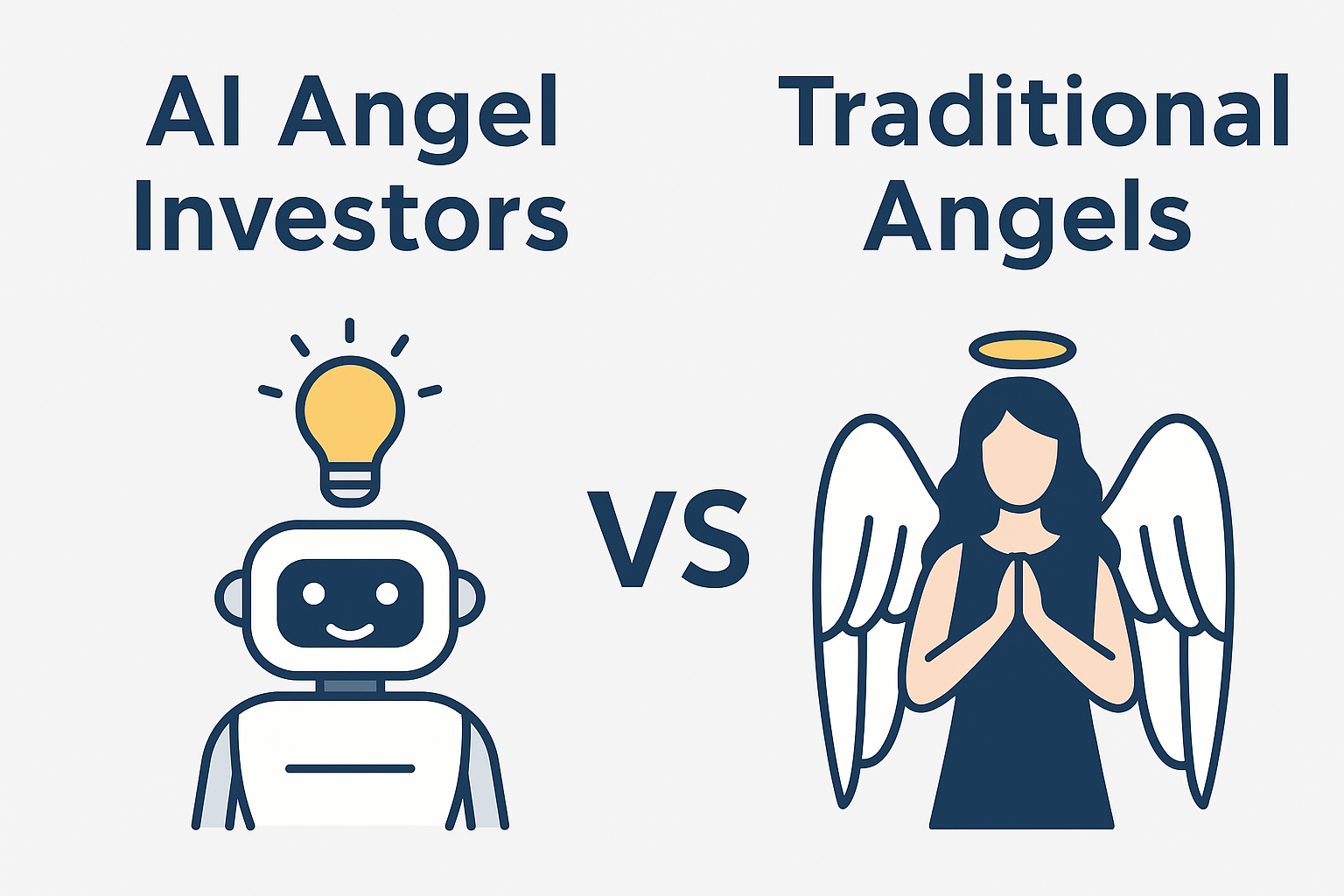
It’s important to understand the difference between AI-focused angel investors and generalist investors.
AI angels have a specialized understanding of the industry. If your company is in artificial intelligence, you need investors who truly understand your work and for that, investor relation experts can be invaluable in making introductions.
AI Angels: Where to Find Them?
Deep Tech Angel Investor Networks
- AngelList Advanced Search – Use the built-in filters to find AI-focused investors by geography, portfolio, or sector.
- Foundersuite – Search for investors with specific AI and ML interests.
You can also download for free resources like curated investor lists to save time and connect with highly relevant profiles.
AI/ML Twitter
Hashtags like #AIangels and #MLfunding can reveal active investors who share their portfolios and investment theses.
LinkedIn AI Groups
Groups like “Artificial Intelligence & Deep Learning” or “Machine Learning Professionals” are ideal for making connections and showing your expertise.
AI Summits & Conferences
Events like NeurIPS, ICML, and ICLR attract angel investors scouting for new opportunities.
Accelerator Alumni Networks
Techstars AI, Plug and Play, NVIDIA Inception, and YC AI batches produce many AI angel investors within a few years.
How to Pitch to AI Investors: What They Actually Want to See
- Lead with the Problem – Start with a big, expensive issue your AI solves.
- Show Real Data – Provide customer testimonials, benchmarks, and measurable results.
- Address Concerns – Be upfront about data requirements, competition, regulations, and talent acquisition.
How to Vet AI Angel Investors: Green Flags & Red Flags
Green Flags
- Technical depth in conversations
- Relevant AI portfolio companies
- Realistic AI product timelines
- Strong network connections
Red Flags
No references from previous portfolio companies
Unrealistic go-to-market timelines
Lack of technical understanding
Unreasonable valuation demands
AI Angels: Regional Hotspots and Target Profiles
Silicon Valley is the most obvious cluster, but also the most crowded and competitive. Narrow your focus to angels who have already invested in AI specifically, as opposed to all tech.
Boston/Cambridge area in the US also has a strong academic AI scene due to MIT and Harvard. Angels in this region often have a research background and an appreciation for the technical depth involved.
Seattle area has a lot of Amazon and Microsoft alumni who become AI angels, as they have insight into how enterprises adopt AI solutions.
Austin, Texas is an emerging AI hub in the US. The angel investor community here is less saturated compared to coastal tech hubs like Silicon Valley or Boston.
Look for angels who were part of Google’s AI or DeepMind teams. They have a deep understanding of technical challenges and market opportunities at scale.
Target angels with a background in enterprise software sales — they know how to sell complex AI solutions to large organizations.
If your AI startup is in the healthcare space, seek out angels who have experience in healthcare and navigating regulatory environments.
Going Beyond Databases
Angel databases like AngelList are great, but they often lead to cold emails which have low response rates. Look for more interactive ways to build relationships.
Venture platform Tablon has set up a series of dinners to specifically match early-stage founders with investors in the Middle East and UAE region.
Investors who are active in the market meet with early-stage entrepreneurs on a monthly basis and give actionable advice on their startups. What’s unique about Tablon is that they’ve recognised that tech investors and startups actually want to build real relationships with each other rather than the typical “cold-pitch” dynamic.
The Tablon community already includes investors that have invested in companies across many technology sectors, including Artificial Intelligence and machine learning.
The value of a 1-on-1 dinner event for AI founders is the time it affords to explain your technical approach as well as the problem you’re solving.
Attendees at past dinners have said that the quality of investors in attendance has been higher than at other events. Investors actually want to understand the complex business models often found in tech.
AI startups could look to dinners like Tablon as an opportunity to reach out to investors who may not be in their traditional network. Rather than “spray and pray” cold emails, this is a chance to introduce yourself and make personal connections.
Timing Your Fundraising Efforts
- Q4 and Q1 are often peak seasons for angel investing activity, as investors have a clearer view of their annual budgets.
- Periods following earnings seasons can also see a spike in angel investing, as successful entrepreneurs may have increased liquidity to deploy.
What AI Angels Want to See
Proof of Concept Completed
AI angels typically don’t invest at the idea stage. Show that you have a working prototype or MVP.
Initial Customer Validation
Demonstrate that at least 3–5 companies are willing to pilot your solution. Letters of intent (LOIs) from prospective customers are powerful.
Technical Team in Place
AI angels want to see you have the talent to execute your vision. Having a strong CTO or lead ML engineer is often non-negotiable.
uilding and Maintaining Relationships
- Share industry insights or trends on LinkedIn or Twitter.
- Make strategic introductions: connect angels with other promising AI startups or technical talent.
- Offer your expertise: some angels welcome technical due diligence support on other AI deals.
- Send monthly progress updates even if they can’t invest early, they may come back for later rounds.
- Celebrate milestones: share new customer acquisitions or technical breakthroughs.
- Post on social media tagging the angels you’re meeting with.
- Keep clear meeting notes with assigned actions for both yourself and the angels.
Relationship First, Pitch Second
As with all investors, AI angels need to see traction and market impact. Leading with technical complexity can make it hard for angels to see the customer problem you’re solving and why it matters.
If your first customer is a Fortune 1000 company and you’ve made real inroads with their adoption, that’s a compelling value proposition any angel would want to back.
Before you rush to cold-email AI angels you’ve never met, focus on building long-term relationships with them first:
- Add value to their community.
- Share your domain expertise.
- Make helpful introductions.
- Volunteer as a technical advisor for other angel deals.
Once you’ve built an authentic relationship, AI angels are much more receptive to hearing about your startup (even if they can’t invest right away).
Start Early
The best time to find angel investors for your AI startup is well before you need them. As soon as you’ve raised your seed round, start thinking about who you’ll turn to for your Series A.
Connect with angels who have invested in or worked with previous startups in your domain. Tap into AI-focused VC and angel groups online.
Prepare for meaningful interactions, but always provide value to the community first.
The right angels will want to invest in you for more than just capital they’ll become long-term advisors, mentors, and partners in your AI journey. Think of AI angels not just as funding sources, but as relationships you’re building for the long haul.
Join Our Investors Club
Get exclusive access to Tablon events where you can meet investors who understand your AI vision and can help you grow your startup.
Conclusion
Securing angel investment for an AI startup demands a strategic and relationship-oriented approach.
Focus on angels who deeply understand the AI landscape, market trends, and founder challenges. Spend less time with generalists lacking technical insights and strategic connections in the AI domain.
Prioritize authentic relationship-building at industry events, online communities, and dedicated networking platforms. For each conversation, go in armed with a solid understanding of your traction, market impact, and the AI problem you’re solving.
The right angel investors are long-term partners in your AI journey. Seek angels who offer technical mentorship, customer access, and strategic guidance, beyond just the initial funding.
The best time to seek AI angels is well before you need their capital. Begin relationship-building early, contribute to the AI community, and approach angels with a clear vision of mutual value and growth.
FAQs
Q1: How much should I expect AI angel investors to invest in my startup?
AI angel investors typically invest $25K-$100K per individual, though some may go higher for exceptional opportunities. The key is finding multiple angels who can collectively provide your target funding amount while bringing complementary expertise to your startup.
Q2: Do AI angels expect different terms compared to traditional angel investors?
Generally, AI angels use similar investment structures (convertible notes or SAFE agreements), but they may have more realistic expectations about development timelines. They understand that AI products require longer development cycles and may be more flexible with milestone-based funding.
Q3: What percentage of my company should I give up to AI angel investors?
For pre-seed AI startups, expect to give up 10-20% total to all angels combined. Individual angels typically receive 1-5% depending on their investment size and value-add. Don’t give up more than 25% total in your angel round.
Q4: Should I focus on local AI angels or look nationally/internationally?
Start locally for easier relationship building, but don’t limit yourself geographically. Many AI angels invest remotely, especially if you’re in an emerging AI hub. The investor’s expertise and network matter more than their physical location for most AI startups.
Q5: How long does it typically take to close an AI angel investment?
AI angel investments typically take 3-6 months from first contact to funding, longer than some other sectors. Angels need time to understand your technology and market opportunity. Plan accordingly and start fundraising well before you need the capital.

